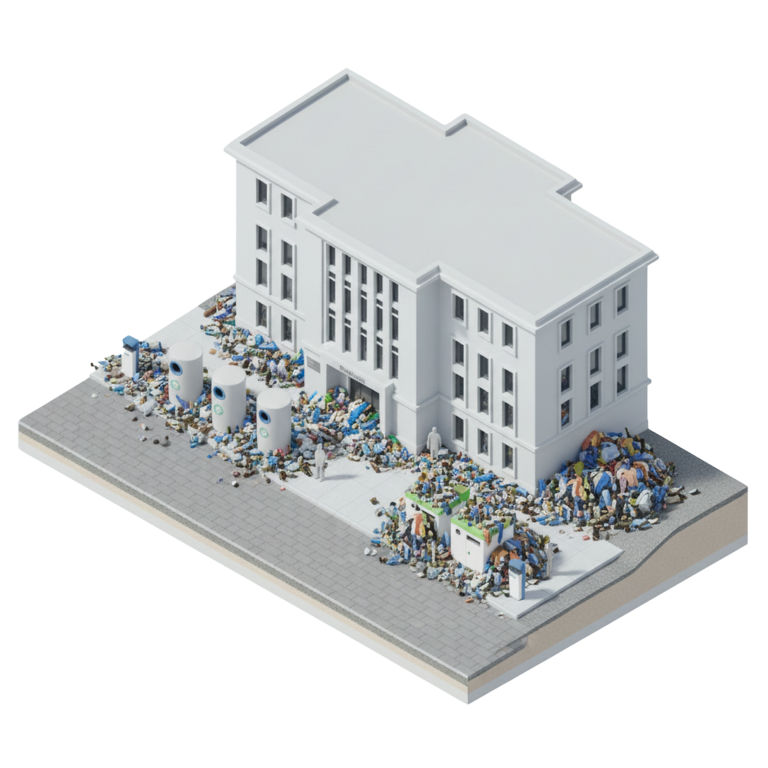
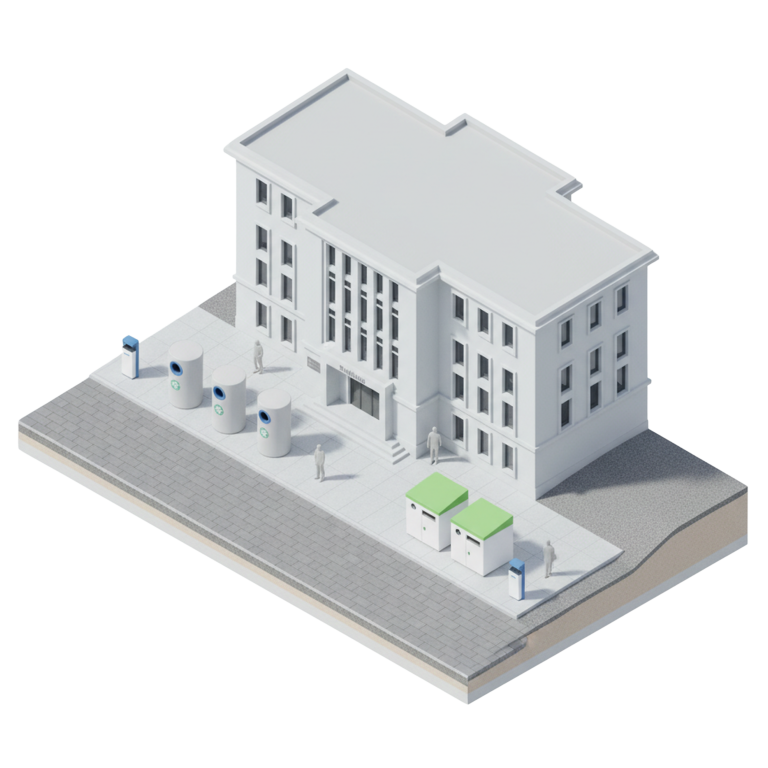
Trash and mess create frustration and additional costs!
Fill-level sensors for trash bins and containers
Overflowing trash bins, full garbage cans, or chaotic container areas are some of the most visible problems in public spaces. They cause citizen dissatisfaction, increase cleaning efforts, and create avoidable follow-up costs for municipalities and waste managers.
Containers overflow, pickups happen too early or too late, and empty trips waste time, fuel, and personnel. On top of that, there are illegal deposits, vandalism, or improper use—often going unnoticed for a long time.
The problem isn’t the container itself. Whether it’s a trash bin, public garbage can, glass recycling container, waste container, or underground system—the key issue is the lack of oversight.
Digital waste management needs real-time data
Traditional route planning often relies on fixed intervals or past experience. This rarely works reliably in residential complexes, city centers, or busy areas.
What’s missing is transparency about the actual fill levels—across locations, current, and objective. Without this data, waste management remains reactive instead of proactive.
Fill-level sensors for trash bins, containers, and public garbage cans
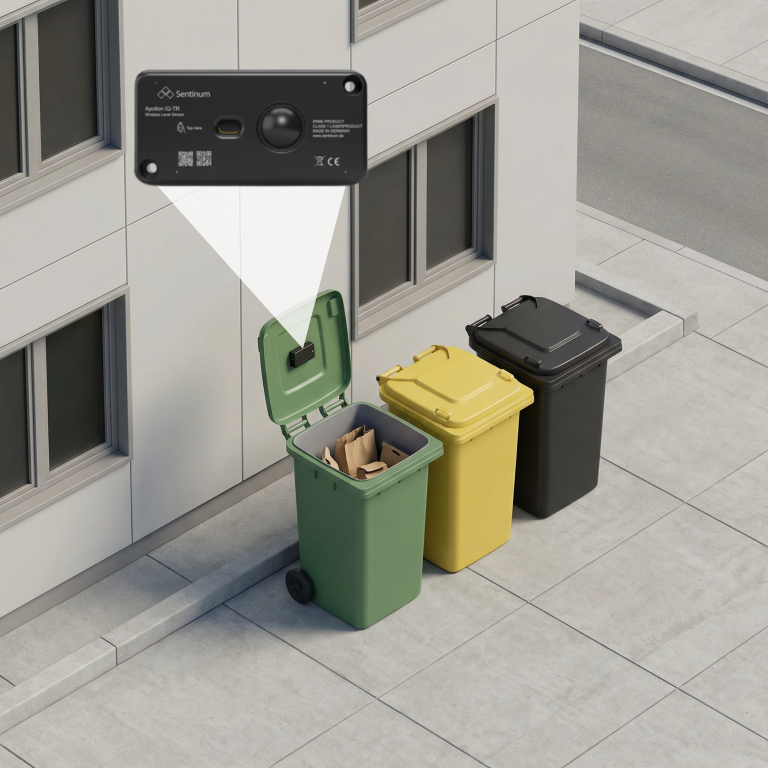
With smart fill-level sensors, waste management becomes measurable and controllable for the first time. The sensors continuously monitor fill levels in real time—whether it’s a small bin, a public trash can, or a large glass recycling container.
Once defined thresholds are reached, alerts can be triggered automatically, pickups prioritized, or collection routes dynamically adjusted. Additional vibration or tilt data also allows early detection of vandalism or improper use.
Technology-agnostic and flexibly integrable
Sensor data is transmitted independently of technology—depending on the scenario via mioty, LoRaWAN, or mobile networks (NB-IoT / LTE-M). This allows selecting the optimal combination of range, energy efficiency, and reliability for each location.
More cleanliness, lower costs, better planning
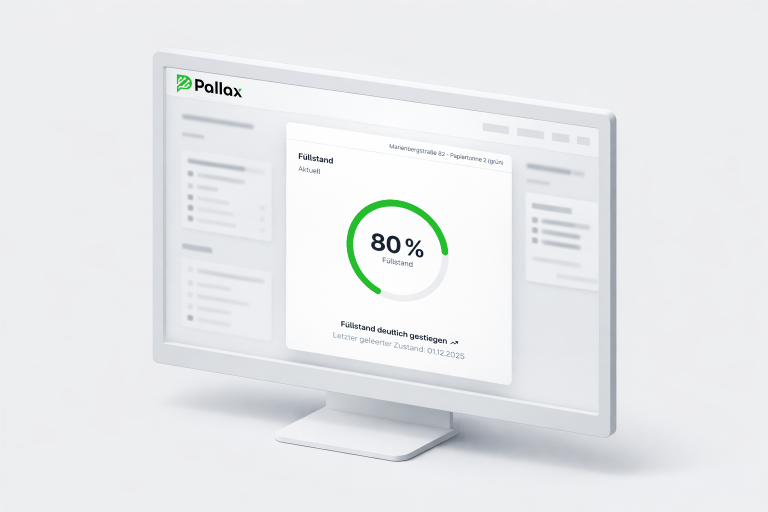
All data is centrally consolidated in Pallax, visualized, and can be directly integrated into automations, dashboards, or existing processes. Municipalities and waste management companies gain measurable benefits:
Fewer overflowing containers and complaints
Reduced emptying and special trips
Lower cleaning and additional costs
Traceable decisions based on real data
The result is an efficient, digital waste management system that makes an impact where it matters most: in people’s daily lives.
Try Pallax for free.No credit card or software installation required