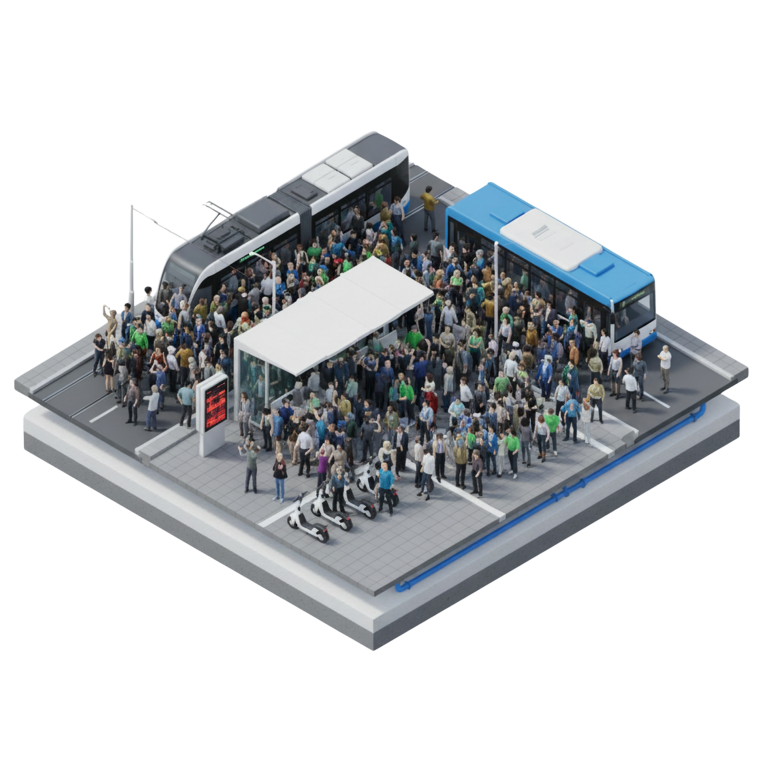
Overcrowding, empty runs, and dissatisfied passengers!
By collecting passenger flows at stops and inside buses and trains in a GDPR-compliant way, a reliable real-time picture of actual public transport occupancy is created for the first time. Sensor-based counting systems record boarding, alighting, and dwell movements anonymously and without personal reference, providing continuous data streams.
All collected information is centrally aggregated, analyzed, and visualized in real time within Pallax. This gives transport operators and authorities a comprehensive overview—from individual vehicles to routes, hubs, and the entire network. Based on this data, peak loads can be identified, timetables optimized, and capacities managed more precisely.
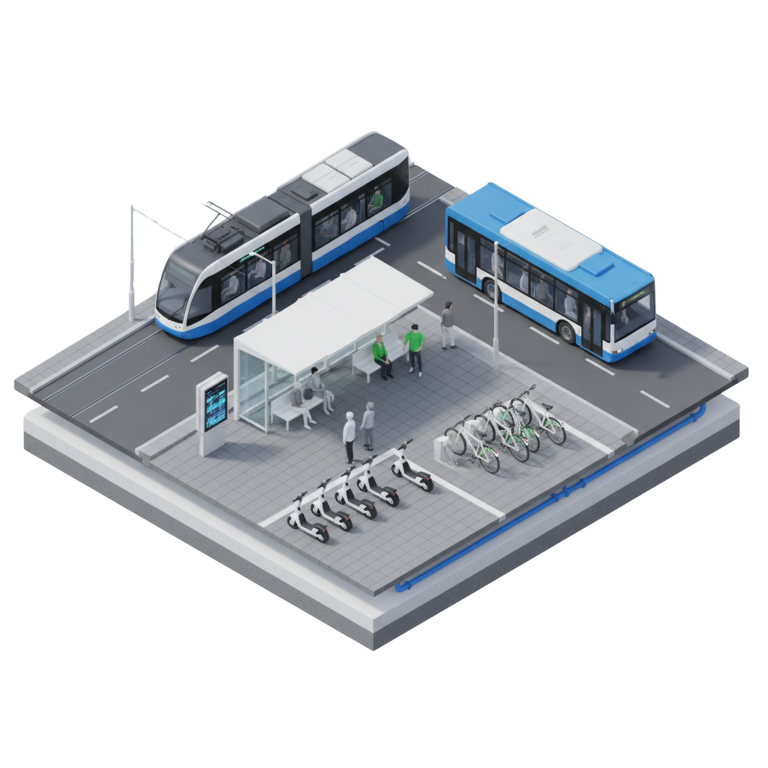
The real-time data also feeds directly into digital passenger information systems, such as digital signage displays at stops, inside vehicles, or in mobility apps. Passengers are transparently informed about occupancy levels and can receive situational alternatives, such as e-scooters, bike-sharing, or alternative routes—helping to actively balance traffic flows.
Automatic passenger counting systems (APC)
By analyzing behavioral patterns—such as recurring peak times, transfer relationships, or stop frequencies—network planning, service design, and resource allocation can be optimized in the long term. Empty runs are reduced, overcrowding is avoided, and the overall quality of public transport is measurably improved.
AI-powered passenger counting for modern real-time mobility data
Copyright Xovis AG
VDV-301, VDV-457, IPxPT
The solution with our partner Xovis is fully designed to be GDPR-compliant and consistently avoids collecting personal data or identifying individual passengers.
The system architecture follows relevant VDV recommendations (including VDV 301 / 454) as well as ITxPT standards for interoperable, manufacturer-independent vehicle systems and interfaces—making it future-proof, integration-ready, and operationally reliable.
Xovis APS-R/APS-B sensors with people & object detection
In addition to detecting passengers, bicycles, strollers, and wheelchairs can also be reliably captured.
This creates a much more detailed picture of actual vehicle and stop usage, going far beyond traditional passenger counting.
These additional insights enable transport operators to evaluate capacities and vehicle types more precisely.
Copyright Xovis AG
Insights into the share of bicycles, passengers with reduced mobility, or strollers feed directly into strategic decisions on vehicle procurement, interior design, and route planning. This allows door concepts, multi-purpose areas, or seating arrangements to be optimally aligned with actual usage patterns.
Based on the data centrally aggregated in Pallax, existing vehicles can also be used more efficiently by adjusting onboard technology—such as routers, displays, or passenger information systems. The result is better-utilized vehicles, improved passenger comfort, and a demand-oriented, future-ready public transport offering.
Automated traffic surveys instead of manual passenger counters in public transport
Try Pallax for free.No credit card or software installation required